Why Cheap Window Tint Turns Purple, Bubbles and Lifts
Purple, bubbling tint isn't bad luck. It's the film and the adhesive breaking down the way they were always going to.
September 17, 2026 · 4 min read
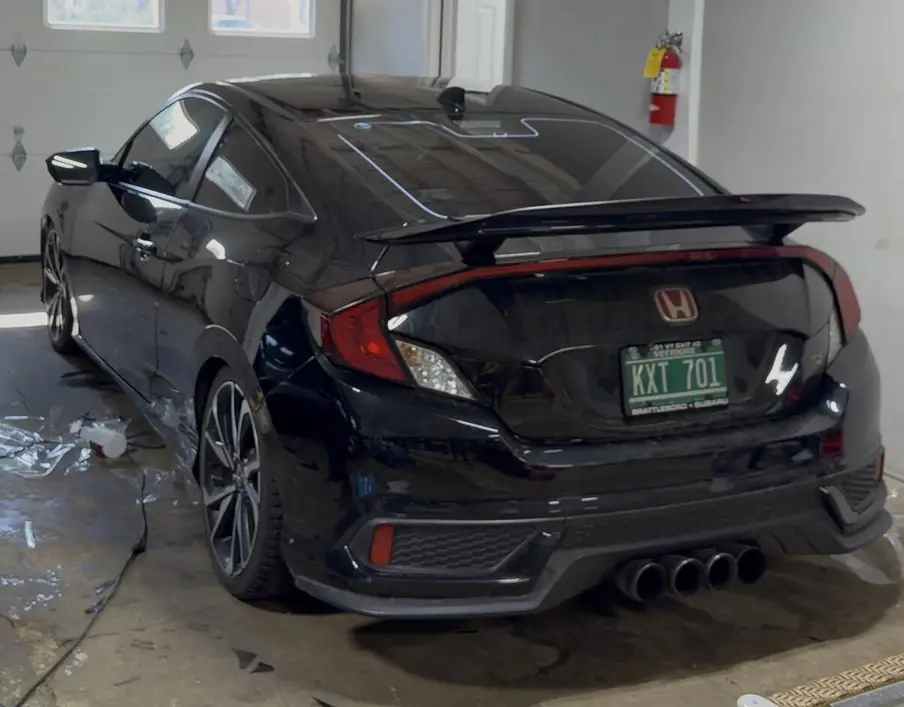
Every dark window on the road eventually tells you what film it's wearing. Fresh tint looks the same across the board for the first year or two. It's what happens after that separates a good install from a bad one. If you've seen a car with tint gone violet along the back glass, or bubbling in patches near the defroster lines, that's not bad luck. That's a film and an adhesive doing exactly what they were built to do, badly.
The film breaks down before you notice it
Dyed window film gets its color from a layer of dye sandwiched between adhesive and a protective top coat. Dye fades. UV light hits that layer every day the car sits outside, and over months and years the dye breaks down chemically. Cheap dye tends to shift toward purple as it degrades, which is why an older tint job so often reads as a plum-colored haze instead of the flat black or dark gray it started as. The adhesive underneath is aging in parallel. Heat cycles, cold cycles, and UV exposure all work on that glue layer, and once it starts to break down it stops holding the film flat against the glass.
Why the edges and corners go first
Adhesive failure never happens evenly. It starts at the edges, at the corners, and along the defroster lines on rear glass, because those are the spots that get the most flex and the least protection. A door slammed thousands of times, a window run up and down for years, sun baking through the corner of a windshield every afternoon. Once the adhesive lets go in one spot, air and moisture get underneath, and that's the bubble you start to see. It doesn't reverse itself. Once a bubble forms, it spreads, because the seal that was holding that section flat is already gone.
Dyed film and ceramic film aren't the same product
The tint on a lot of older cars is basic dyed film, built to a price point. It looks dark on day one, and that's most of what it's designed to do. Premium ceramic tint is a different material, built around ceramic particles instead of dye, and it holds its color and its performance for years longer because there's no dye layer sitting there degrading in the sun.
- Dyed film: color comes from a dye layer that fades and can shift purple over time
- Ceramic film: color and performance are built into a ceramic particle layer, not a dye that breaks down
- Cheap adhesive fails at the edges first; a proper ceramic install is heat-shrunk and fitted panel by panel
What ceramic tint actually does once it's on your car
Premium ceramic tint blocks up to 99% of harmful UV rays, which matters for your skin on a daily commute and for the dashboard, seats, and trim inside the car that fade and crack under years of sun. It rejects a real amount of solar heat too, so the cabin runs cooler and the air conditioning isn't working as hard on a hot afternoon. Beyond temperature, tint cuts glare from the sun and from oncoming headlights at night, which makes a longer drive easier on your eyes, and it adds a layer of privacy that keeps valuables out of sight when the car is parked.
A same-day install, done right
A full ceramic tint install at our shop in West Springfield runs 6 hours or more depending on the vehicle, because every window gets cut and heat-shrunk to its own curve rather than stretched across from a generic pattern. Pricing depends on the vehicle and the film, so give us a call and we'll walk you through it. Tint darkness rules vary by state, so it's worth checking your own state's current law, or asking us, before settling on a shade. If your current tint has already gone purple or started bubbling, that's a separate job first, removing the old film and adhesive residue before anything new goes on the glass, which we cover in its own article.
The first few days, and the shop warranty
Fresh ceramic tint needs a short cure time before it looks and behaves the way it will for years afterward. You might see a slight haze or small water pockets under the film for the first few days. That's normal curing, not a sign anything went wrong. We ask customers to leave the windows up and avoid rolling them down for a few days so the edges seal properly. Our work carries a shop warranty, so if something isn't sitting right once it's fully cured, bring it back and we'll take a look before you assume the worst.
Rook Auto Customs, (860) 764-1850
Call (860) 764-1850More articles
What a Starlight Headliner Install Actually Involves
The stars go in before the suede goes on, and almost everything about how it looks gets decided before we ever touch your car.
Chrome Delete: What It Actually Costs to Do Properly
Chrome delete is a fitting job first and a color job second, and that order is what separates a clean result from a peeling one.