Window film
Ceramic window tinting, cut and heat-shrunk pane by pane
Premium ceramic film blocks up to 99 percent of UV and cuts glare and heat, installed one curved piece of glass at a time. Old tint comes off first when it needs to.
Chapter 01
What makes tint go purple, bubble and lift
Cheap dyed film is the one that goes wrong first, and it goes wrong in the same order every time. The dye itself breaks down under sun exposure and shifts from black toward a flat purple-brown, usually on the rear window and back doors first because that is where the glass takes the most direct sun over a parking lifetime. Underneath the color, the adhesive is doing the real work of holding the film flat against the glass, and once it has been through enough heat and cold cycles it lets go at the edges before it lets go anywhere else. That is why a failing tint job always shows up first as a bubble creeping in from the trim line, not as a bubble in the middle of the glass.
Premium ceramic film does not carry that same dye layer, so there is nothing in it to break down and turn purple in the first place. It still has to be installed correctly to hold: clean glass, a proper squeegee pass to push every bit of water and air out from underneath, and enough cure time before the car goes back out into weather. Skipping any part of that is what turns a good film into a bad-looking job regardless of what the film itself is rated for.
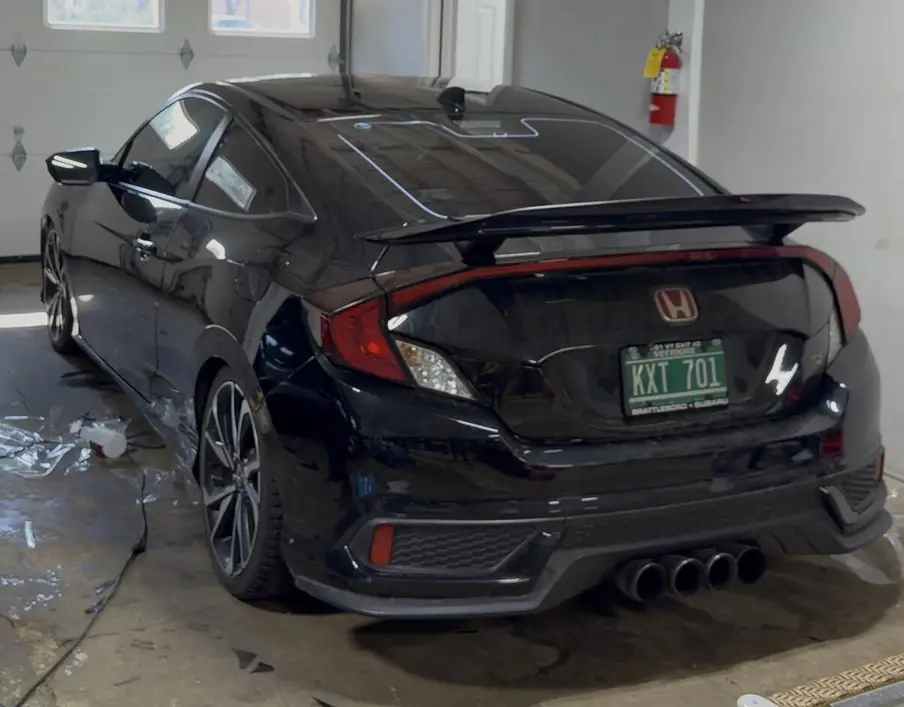
Black Honda Civic Si with finished ceramic window tint, photographed inside the Rook Auto Customs shop
Every window on your car is a different curve
No two pieces of glass on a car are flat the same way, so a tint job is really a series of separate small jobs, one per window, rather than one job repeated five times. Each piece gets cut to its own pattern and heat-shrunk with a heat gun to sit flat against that specific curve, since a film cut for one door glass will not lie right on another even on the same car.
Rear glass is the one that takes the most time. The defroster grid embedded in the glass means the film has to be worked down around every line without trapping a bubble against it, and the rear windshield's curve usually runs deeper than anything on the doors, so it takes more heat and more patience to shrink the film down flat. That is a real part of why a full car is planned as a six-hour-plus job rather than something rushed through in an hour.
Chapter 03
What ceramic film actually does once it is on
Ceramic film blocks up to 99 percent of the sun's UV rays, the part of sunlight that fades and cracks a dashboard and seats over years of parking in the sun, and the part that does the most skin damage on a long commute with the sun coming through the driver's window.
It also rejects a meaningful amount of solar heat before that heat ever gets into the cabin, which means the air conditioning is not fighting as hard to keep the car cool on a hot day. On top of that it cuts glare off the windshield and side glass and adds a layer of privacy that makes it harder for someone walking past a parked car to see what is sitting on the seats.
Coming off old film first
Old tint that has gone purple, is bubbling, or is peeling at the corners has to come off before anything new goes on. That is billed separately at 50 dollars an hour, with most vehicles taking one to two hours depending on how bad the old film has aged and how much adhesive is left behind once the film itself is pulled.
The adhesive residue left on the glass after the film comes off gets cleaned before new film goes on, since any leftover glue under a new sheet of tint will show up as a cloudy patch later. If a new ceramic install is going on right after, the removal and the new install are usually done back to back the same day rather than as two separate visits.
The first few days, and the shop warranty
Freshly installed film looks a little hazy for the first few days. That is trapped moisture working its way out from underneath as the adhesive finishes curing, and it clears on its own. It is worth leaving the windows up during that window rather than rolling them down, since dropping the glass before the film has fully set is one of the more common ways a brand-new install gets a scratch or a lifted edge that did not need to happen.
Past that first week, the work carries the shop's own warranty. If an edge lifts or a bubble shows up that was not there when the car left, bringing it back is the right move rather than living with it.
Rook Auto Customs — Shop warranty on our work. Call (860) 764-1850.
In the bay